Book · Julian R. Sterling
The Glass and Glazing Company Owner
Starting, Buying and Running a Glass Company: Storefront Bids and Labor Hours, Safety Glazing and the Codes, the Shop and the Field Crews, Shower Enclosures, Door Service Agreements, Contractor Packages and Retainage, Cash Flow and Valuation
About the book
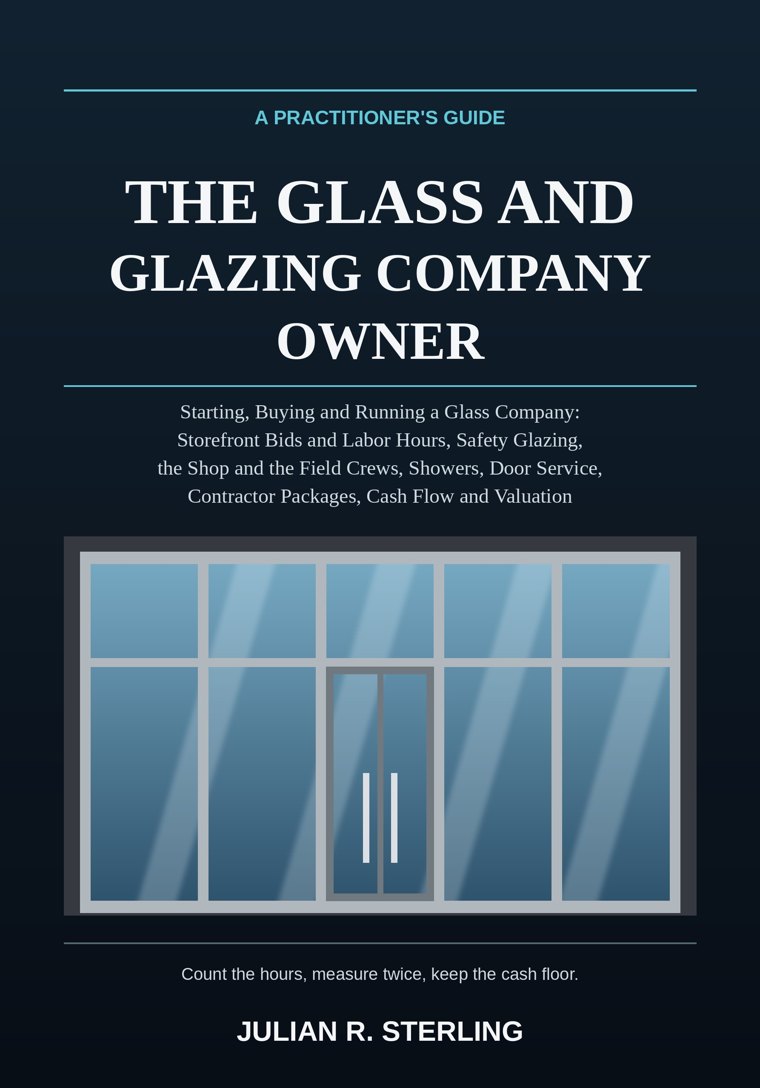
A glass company sells openings: a storefront and its entrance, a glass wall in an office, a frameless shower, a fogged window unit replaced, a storefront door that closes again at night. Each is priced before the work and built, set or repaired by people paid for every hour. Behind them sit the safety glazing question, glass that cannot be cut once it is tempered, deposits held for jobs not yet installed, general contractor packages that hold back retainage, and five trucks with loans below EBITDA. This guide works through each of them in numbers, from the owner's chair.
One fictional company runs through every chapter: Ardmoor Glass Company, with 3 shop fabricators, 3 field crews of two, 3 residential installers and 2 service technicians. It earned revenue of $4,286,280 in 2026, reported EBITDA of $470,470 and adjusted EBITDA of $546,380 (12.7%). The book follows its storefront bids, its glass orders, its shop and its crews at the open edge, its showers measured twice, its door maintenance agreements, its general contractor packages, its people, its P&L and its cash floor, a growth plan, and ends with two offers for the company.
What is inside:
- 16 chapters in four parts: the business, commercial glazing, residential, service and contract work, the numbers and the exit
- The labor hour as the unit: a loaded fabricator-hour costs $32.76, a loaded field crew-day $624.96, and the commercial line earns $49.29 per labor hour, self-performed, after the wages of every paid hour
- A storefront and entrance package bid line by line, engineering and the rented lift inside the marked-up cost: $32,510 in all, $69.47 per labor hour of the job, and $45.03 after a chipped lite and a second trip
- The federal safety glazing standard, hazardous locations as commonly listed, fall protection at open edges and wall openings, crane and aerial lift rules and federal bonds, each as read in November 2026
- Residential glass priced by the installer-hour ($86.73 per installer-hour in the case), the deposit rule and the remake of a panel measured short, and a service line with door maintenance agreements ($777 per technician-day)
- Reported and adjusted EBITDA, SDE, break-even at 81.6% of revenue, working capital with customer deposits as a liability, the cash floor, a three-year plan and two offers for the company; check-lists and a glossary
Free: the glass company business model in Excel
The Ardmoor model from the book, with live formulas: the commercial line with its labor hours and self-performed contribution, the storefront bid and its second trip, residential jobs by kind with the price rule and the shower quote, service and door maintenance agreements, the P&L with reported and adjusted EBITDA, break-even, working capital, the cash floor and two offers for the company. No macros, nothing locked.
What is inside
- Chapter 1: How a Glass Company Makes Money
- Chapter 2: Licenses, Insurance and the Contracts You Sign
- Chapter 3: Starting, Buying, or Taking Over a Glass Shop
- Chapter 4: The Commercial Package, the Labor Hour and Contribution
- Chapter 5: Pricing a Storefront: The Bid, Line by Line
- Chapter 6: Safety Glazing, the Codes and the Engineer
- Chapter 7: The Shop: Fabrication Hours, Glass Orders, Stock and the Second Trip
- Chapter 8: In the Field: Crews, Rack Trucks, Lifts and Open Edges
- Chapter 9: Residential Glass: Showers, Mirrors and the Installer-Hour
- Chapter 10: Service and Door Maintenance Agreements: The Technician-Day
- Chapter 11: Working for General Contractors: Submittals, Retainage, Back-Charges and Bonds
- Chapter 12: People and Subcontractors: Wages, Overtime, On-Call Nights, Safety and the Scope You Buy
- Chapter 13: Reading Your P&L: Gross Profit, Reported EBITDA, Adjusted EBITDA and SDE
- Chapter 14: Break-Even, Seasons, Deposits, Working Capital and the Cash Floor
- Chapter 15: The Growth Plan: A Fourth Installer and a Third Service Truck
- Chapter 16: What Your Glass Company Is Worth, and Selling It
- Conclusion
- Appendix A: The Ardmoor Model, Tab by Tab
- Appendix B: Check-Lists
- Appendix C: Glossary
Read first
To read: How much does a glass company make?
To read: How to price a storefront glazing job
To read: How much is a glass company worth?
Updates
Safety glazing rules and the edition of the building and energy codes a place adopts, contractor licensing, fall protection, crane and aerial lift rules, wage and hour rules, lien, retainage and bond rules, tax rules on vehicles and equipment, SBA lending rules and fees change, and they differ by state, county and city. This page will note material changes that affect the book.
Also by Julian R. Sterling
Related titles. The full list is on the author page.